Avatar Legends beginner guide
Avatar Legends beginner guide guide for Avatar Legends beginner guide: focused title, focused description, focused H1, practical notes and high-density Avatar Legends beginner guide coverage.
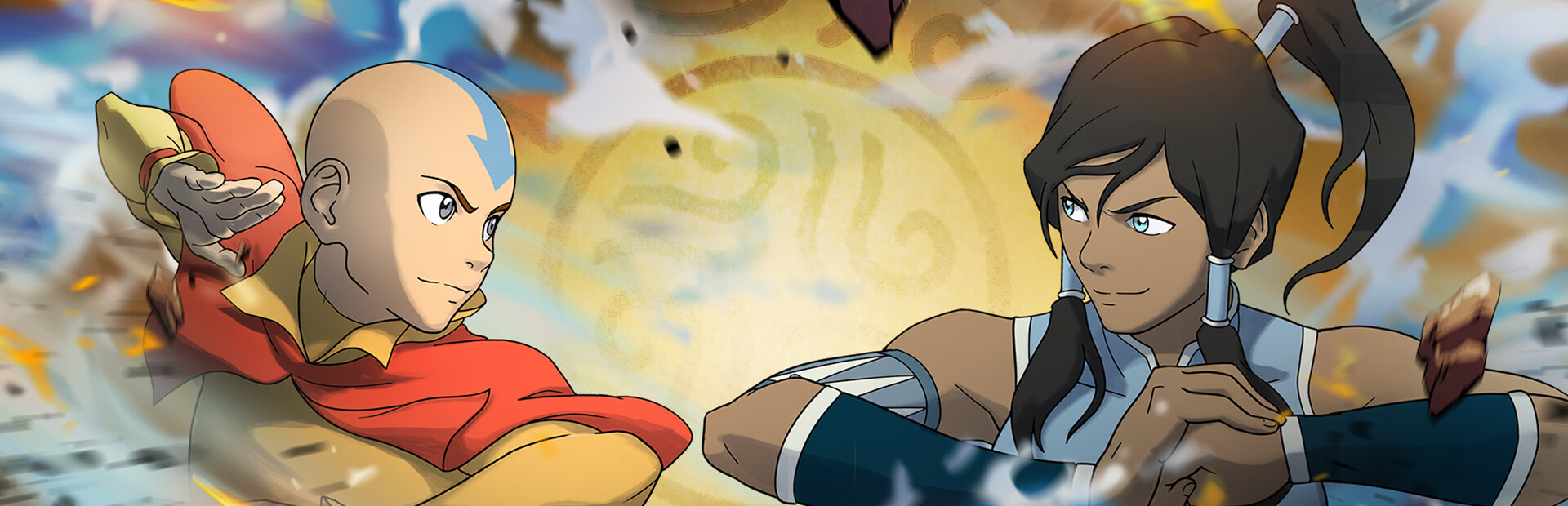
Avatar Legends beginner guide focus
Avatar Legends beginner guide is the core keyword for this page. Avatar Legends beginner guide appears in the title, description, H1, headings and practical notes so search engines can clearly read the page intent. This Avatar Legends beginner guide keeps Avatar Legends beginner guide central while reducing unrelated wording.
Avatar Legends beginner guide quick intent: players searching Avatar Legends beginner guide want direct answers, simple structure, current details and links to related Avatar Legends pages. Use this page when Avatar Legends beginner guide is the main query, and compare Avatar Legends beginner guide with the connected guides only after the main answer is clear.
- Avatar Legends beginner guide focus 1: use Avatar Legends beginner guide for title, description, H1, guide navigation and search intent.
- Avatar Legends beginner guide focus 2: use Avatar Legends beginner guide for title, description, H1, guide navigation and search intent.
- Avatar Legends beginner guide focus 3: use Avatar Legends beginner guide for title, description, H1, guide navigation and search intent.
- Avatar Legends beginner guide focus 4: use Avatar Legends beginner guide for title, description, H1, guide navigation and search intent.
- Avatar Legends beginner guide focus 5: use Avatar Legends beginner guide for title, description, H1, guide navigation and search intent.
- Avatar Legends beginner guide focus 6: use Avatar Legends beginner guide for title, description, H1, guide navigation and search intent.
- Avatar Legends beginner guide focus 7: use Avatar Legends beginner guide for title, description, H1, guide navigation and search intent.
- Avatar Legends beginner guide focus 8: use Avatar Legends beginner guide for title, description, H1, guide navigation and search intent.
- Avatar Legends beginner guide focus 9: use Avatar Legends beginner guide for title, description, H1, guide navigation and search intent.
- Avatar Legends beginner guide focus 10: use Avatar Legends beginner guide for title, description, H1, guide navigation and search intent.
- Avatar Legends beginner guide focus 11: use Avatar Legends beginner guide for title, description, H1, guide navigation and search intent.
- Avatar Legends beginner guide focus 12: use Avatar Legends beginner guide for title, description, H1, guide navigation and search intent.
Avatar Legends: The Fighting Game is easy to start because it uses a compact four-button structure, but it is still a real 1v1 fighting game. The best first goal is not a long combo. Learn movement, Flow, Energy, defense, short confirms and your first character plan.
What kind of game is it?
Avatar Legends is a hand-drawn 2D fighter based on the Avatar universe. Each match is about controlling space, forcing a defensive mistake, converting a hit into damage, and managing resources better than the opponent.
Official store information highlights:
- 12 playable launch characters.
- Offline and Online Versus.
- Story Mode and Arcade Mode.
- Training Mode with advanced tools such as hitboxes, frame data and save states.
- Art Gallery with Avatar series artwork.
- Online play with rollback netcode and cross-play.
- A first ranked season adding Ranked Mode, Spectator Mode, Beginner's Zone, Casual Modes, new tutorials and Combo Trials.
The four-button base
The game is built around three attack buttons and one system button.
| Button concept | What it does | Beginner use |
|---|---|---|
| Light / A | Fast, low-commitment attack | Start pressure, interrupt gaps, begin short confirms. |
| Medium / B | Balanced attack | Link your simple routes and control mid range. |
| Heavy / C | Slower but higher reward | Use after a confirmed hit or as a punish. |
| Flow | Movement, evasion, defense and cancel system | Spend carefully; do not treat it as infinite dodging. |
Common combinations reported by controls guides include A + Flow for Throw, B + C as a Dash macro, C + Flow for Guard Reversal, and A + B + C for Super. Always verify your exact button mapping in the in-game settings for your platform.
Movement comes before combos
New players lose many matches because they jump or dash without a reason. Start by learning these movement habits:
- Walk forward and backward to feel your normal attack range.
- Dash only when you know what you want next: attack, throw, jump, or retreat.
- Practice dash jump because dash momentum can carry into jumps.
- Use high jump to change vertical timing instead of always jumping the same way.
- Learn one anti-air answer early, including air throw if your opponent jumps too much.
Flow explained
Flow is the identity of Avatar Legends. It controls mobility, evasive movement, defensive stance, reversals and cancels. The important lesson is that Flow is a resource, not a panic button.
Flow can help you:
- Dash or evade with character-specific movement.
- Hold a defensive Flow Stance against high and low attacks.
- Cancel certain actions into movement.
- Escape pressure with Flow Reversal.
- Create creative routes that match each character's bending style.
Flow can also get you killed if you spend it carelessly. Third-party system guides describe an Unbalanced state when Flow resources are exhausted: Flow options become unavailable and the opponent gets much stronger punish opportunities. Even if exact values change with patches, the principle is clear: keep enough Flow in reserve to defend yourself.
Energy and Chakra basics
Energy is the offensive resource. You build it through skilled play such as landing special techniques, throws or successful interactions, then spend it on stronger options.
Use Energy for:
- EX special techniques that improve damage, safety or combo routes.
- Super Arts for high-damage cinematic finishes.
- Character-specific high-resource routes.
Beginner rule: do not spend Super unless you confirmed the hit or are punishing something obvious. It is usually better to use small amounts of Energy for reliable EX value than to save forever and never spend.
First combo structure
Start with stable routes:
- Light > Medium > Heavy.
- Light > Medium > Heavy > special technique.
- Auto-combo as a learning tool, not your final plan.
- Throw after dash when the opponent blocks too much.
- One anti-air punish against repeated jumps.
Auto-combos are useful because they show the rhythm of attacks, but manual confirms teach spacing and damage better over time.
Defense: what to do when pressured
When you are stuck blocking, rotate between simple answers instead of mashing.
| Situation | First answer | Why |
|---|---|---|
| Opponent is far away | Block, walk, or reposition | Do not spend Flow for no reason. |
| Opponent repeats safe pressure | Look for throw gaps, movement gaps, or reset points | You need to identify where pressure actually ends. |
| Opponent overuses Flow Stance | Throw | Throws beat defensive turtling and Flow Stance habits. |
| You are trapped in the corner | Guard Reversal or Flow Reversal when the threat is clear | Escape tools are strong but expensive. |
| Opponent jumps constantly | Anti-air or air throw | Stop jump-ins before they become pressure. |
Choosing your first character
Pick a character based on learning goals, not popularity.
| Character | Why start here | Watch out for |
|---|---|---|
| Zuko | Clear mid-range fundamentals, fire pressure, simple confirms. | Do not overuse unsafe rush-ins. |
| Korra | Direct offense, clear route planning, strong pressure. | Avatar Cycle routes require discipline. |
| Toph | Armor-style pressure and high reward teach commitment. | Slow decisions can be punished by mobile characters. |
| Katara | Spacing, water/ice control and patient defense. | Requires comfort with slower screen control. |
| Aang | Great if you love movement and speed. | Harder if you cannot control air routes yet. |
Avoid making Azula, Zaheer, Avatar State Aang or Nightmare Korra your first serious character unless you enjoy training-room execution and route discovery.
Modes to use in order
A good first-week order is:
1. Training Mode: confirm buttons, movement, one combo, one anti-air.
2. Character Lessons / new tutorials: learn the intended plan for your character when available.
3. Combo Trials: use them to learn timing, but do not treat every trial as a match combo.
4. Arcade Mode: practice decision-making without online pressure.
5. Beginner's Zone / Casual Mode: test your basics against humans.
6. Ranked Mode: enter only after you have one reliable combo and one defensive answer.
Training Mode checklist
Use the training tools deliberately:
- Turn on hitboxes to see why attacks win or lose.
- Use frame data to identify which attacks are punishable.
- Save states for repeated corner, wake-up and anti-air situations.
- Record the dummy doing one pressure string, then practice escaping it.
- Practice on both player sides so your inputs work facing left and right.
Common beginner mistakes
- Learning a long combo before learning neutral movement.
- Spending all Flow to escape every small threat.
- Never throwing blocking opponents.
- Jumping at the same timing every approach.
- Using Super without a hit confirm.
- Switching characters after every loss instead of fixing one habit.
- Going straight to ranked before testing connection and controls.
A simple seven-day learning plan
| Day | Focus | Goal |
|---|---|---|
| 1 | Buttons and movement | Know Light, Medium, Heavy, Flow, dash, jump and throw. |
| 2 | One character | Pick a main and learn their intended range. |
| 3 | One combo | Land Light > Medium > Heavy > special ten times on each side. |
| 4 | Defense | Practice blocking, throw tech habits, Flow Reversal and Guard Reversal. |
| 5 | Anti-air | Stop repeated jumps with one reliable answer. |
| 6 | Casual matches | Play short sets and write down two recurring problems. |
| 7 | Review | Fix one problem before learning new routes. |
What to read next
- Use the controls page if you want a deeper input and Flow breakdown.
- Use the characters page to choose a main by playstyle.
- Use the tier list only after you understand what kind of character you enjoy.
- Use the crossplay page before playing online with friends on other platforms.